Implant Overdentures
An implant overdenture is a removable denture that attaches to implants in the jaw. The attachments keep it steadier while you speak and eat than a denture resting on the gums alone, and you take it out to clean it and the implants.
It can attach in two main ways: to each implant separately, or to a bar that joins the implants. Which suits you, and how many implants are needed, is decided after an examination of your jaw.
Individual-attachment overdentures
Each implant carries its own attachment, and the denture snaps onto them. Nothing joins the implants to one another, so each one is cleaned on its own.
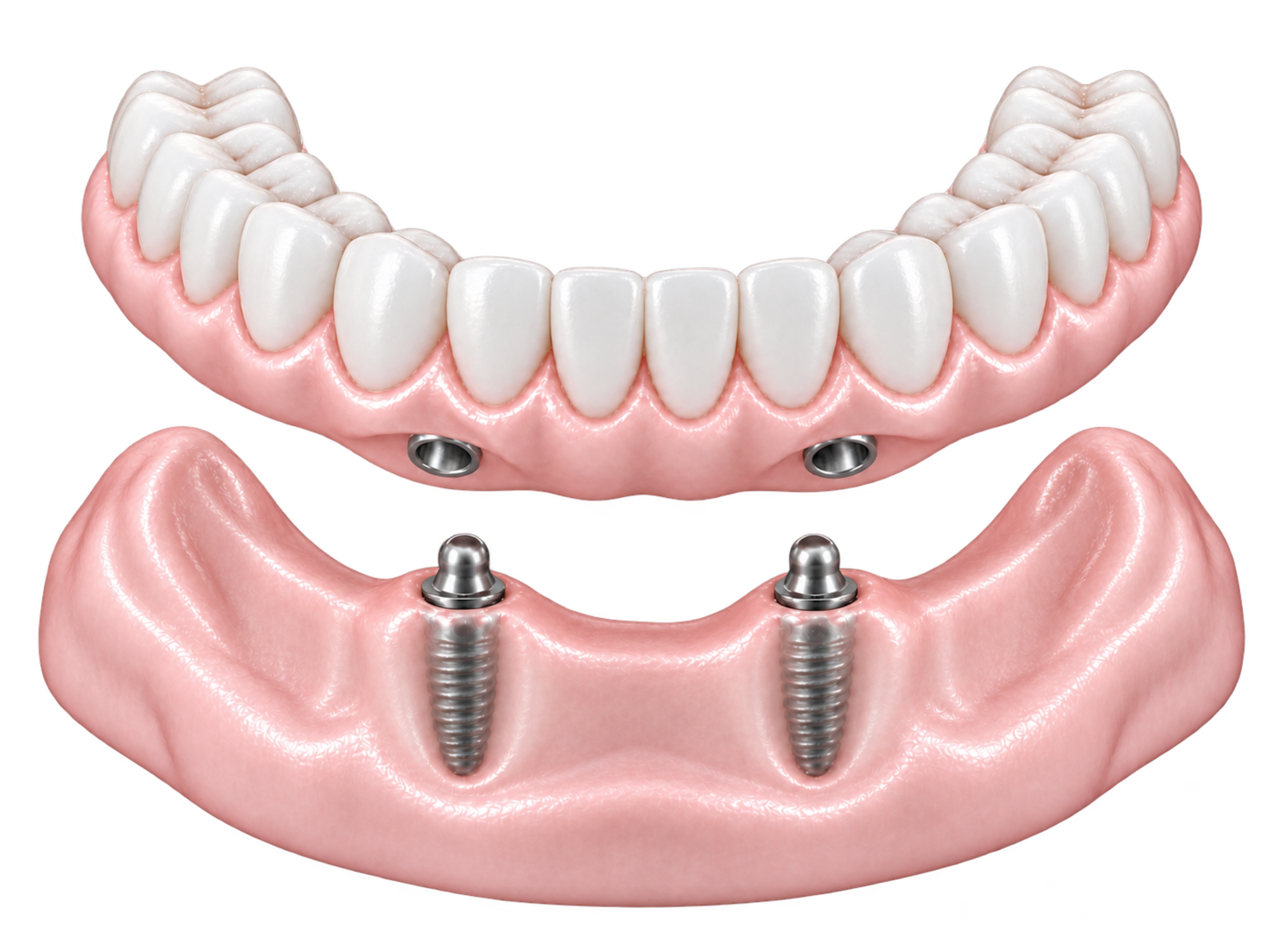
- Removable dentureIt snaps onto the attachments and comes out for cleaning.
- AttachmentsIn this example, two implants with snap attachments hold the denture.
Bar-retained overdentures
A metal bar joins the implants, and clips inside the denture fit over it, so the hold is shared between the implants. The denture is still removable: it lifts off the bar for cleaning, and the bar is cleaned in place.
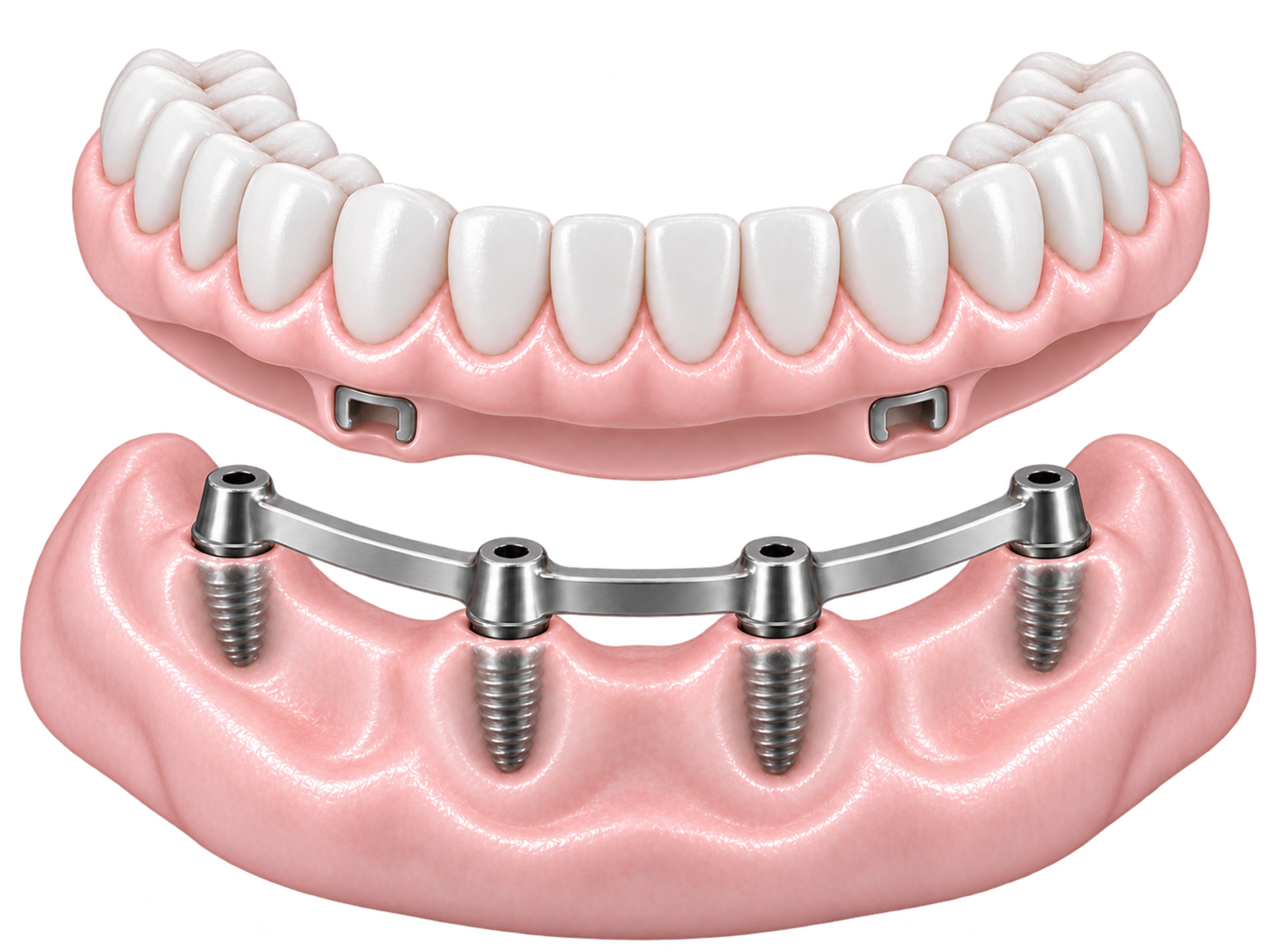
- Removable dentureIt clips onto the bar and comes out for cleaning.
- BarIt joins the implants and holds the denture.
- ImplantsThey carry the bar; this picture shows four, and the number depends on your jaw.
How the two compare
Both are removable dentures held by implants. What differs is how they attach: a separate attachment on each implant, or a bar joining the implants. Which suits you depends on your jaw, the bone available and which you would find easier to clean; we explain this after the examination.
If you would rather have teeth that are fixed and not taken out at home, ask about full-arch options.
Kinds of attachment
Several kinds of attachment are used with overdentures. A ball attachment is a small round post on the implant that a socket inside the denture snaps onto. A low-profile attachment works in a similar way but is shorter, which helps when there is little room under the denture. A bar joins two or more implants, and clips inside the denture fit over it. Magnetic attachments use attraction between a magnet and a matching metal component to help retain the denture. Telescopic attachments use an inner component secured to an implant and a matching outer component within the denture.
Attachment choice depends on the clinical situation, available space, cleaning and maintenance needs. These descriptions explain different systems; they do not mean that every system is offered or suitable for every patient.
The denture, the attachment and its parts
Three things are easy to mix up. The overdenture is the removable denture. The type of attachment is how it connects: to each implant separately or to a bar. The attachment parts are the small pieces that make that connection: one on the implant or bar and a matching one inside the denture, often called the matrix. They can wear and may need replacing, but replacing a part is not a separate kind of treatment. Your plan explains what is proposed for you.
Related treatments
Questions patients ask
How is an overdenture different from a regular denture?
A regular denture rests on the gums; an overdenture clips onto implants, which hold it in place.
Do I take it out at night?
Removable overdentures are generally taken out at night. Follow the instructions given when yours is fitted, including any different guidance for the initial healing period.
Can my current denture be used?
Sometimes it can be adapted; often a new one is made. We check yours at the examination.
How many implants does it need?
It depends on your jaw and on the type of attachment; we explain the number in your plan. The pictures on this page each show one example.
Talk with us about your options
Book a consultation, or call us and we will find a time that suits you.