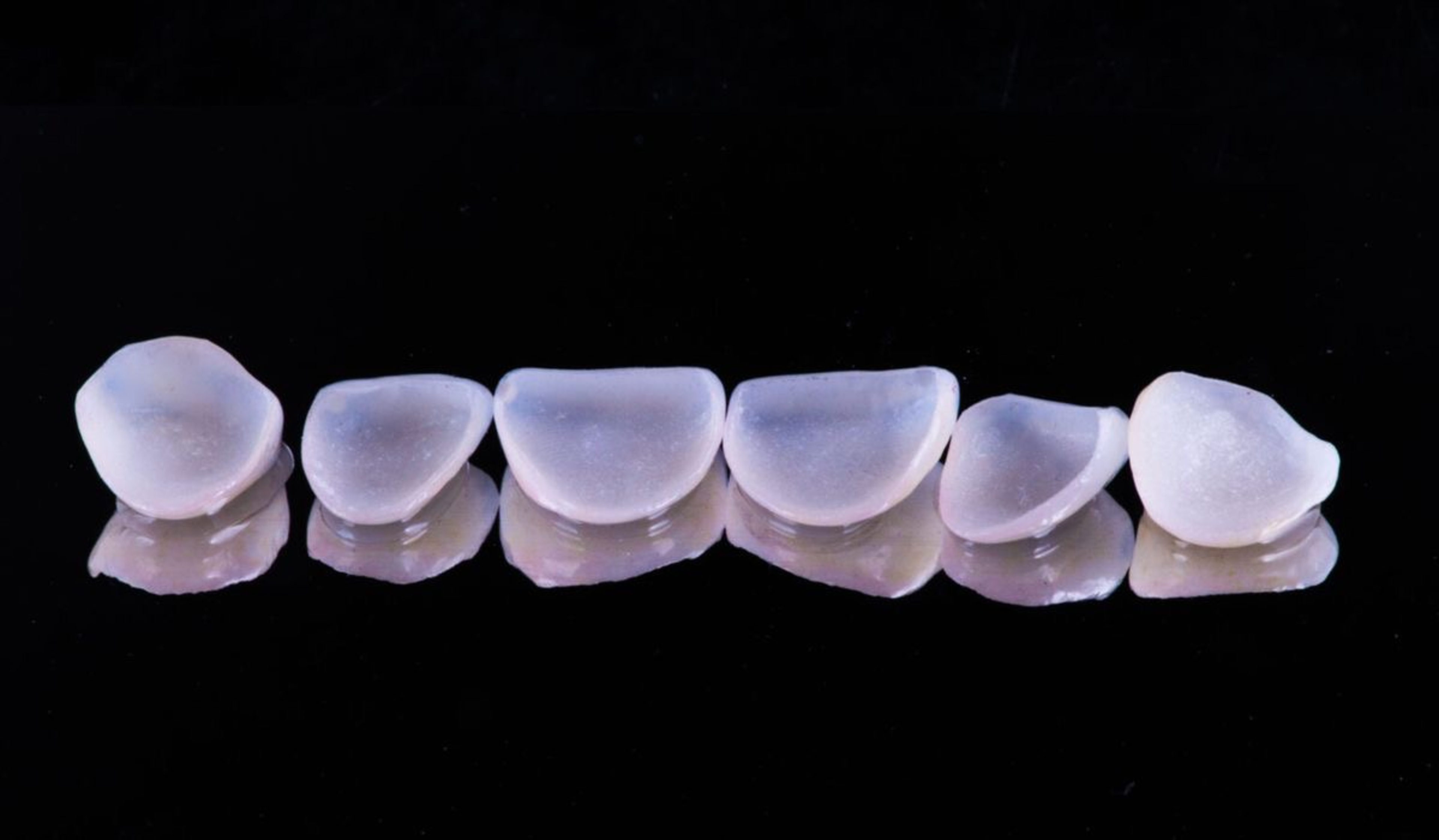
The short answer: veneers differ in three separate ways: the material, the way they are made, and how much of the tooth is prepared. A brand name belongs to a product, and a style such as a "Hollywood smile" is a look; neither is a type of veneer of its own.
1. By material
- Composite resin: tooth-colored resin, shaped directly on the tooth or made outside the mouth. Easier to repair; less resistant to staining and wear.
- Feldspathic porcelain: a traditional ceramic built up in thin layers by a dental technician, valued for its translucency.
- Lithium disilicate glass-ceramic: a stronger glass-ceramic, pressed or milled. One well-known product is IPS e.max by Ivoclar, which the manufacturer lists for veneers from 0.4 mm thick.
- Zirconia is a ceramic used for crowns and, in selected cases, veneers. Its appearance and translucency depend on the formulation and thickness. Long-term evidence for zirconia veneers is more limited than for established glass-ceramic options.
2. By how they are made
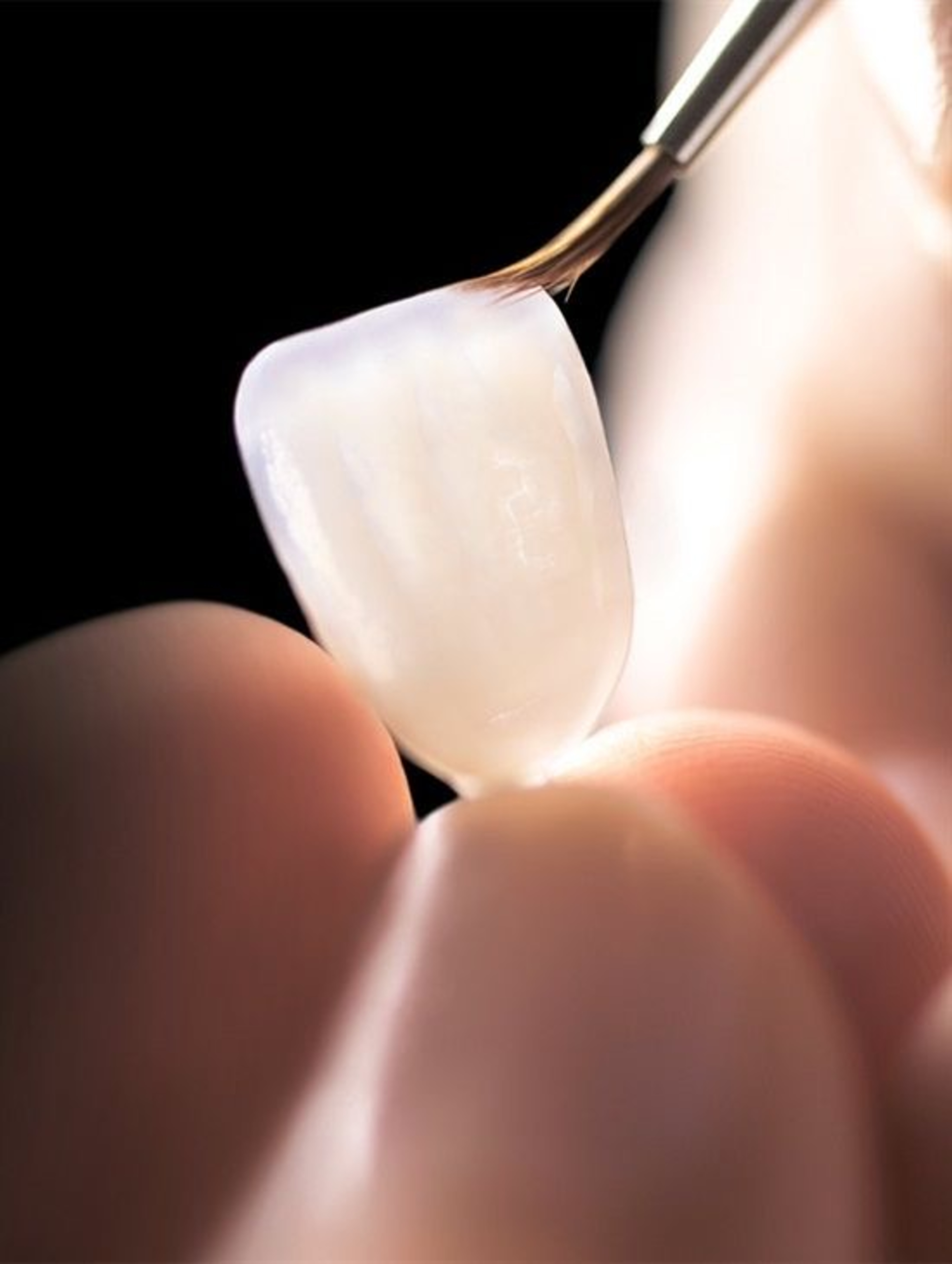
- Directly in the mouth: composite resin is shaped on the tooth itself, often in one visit.
- Indirectly, outside the mouth: the veneer is made first and bonded later. Porcelain can be built up in layers by hand, glass-ceramic can be pressed in a mold, or the veneer can be designed on a computer from a digital scan and milled from a ceramic block (CAD/CAM). CAD/CAM is a method, not a place: it can be used in a dental laboratory or in a dental office.
3. By how much of the tooth is prepared
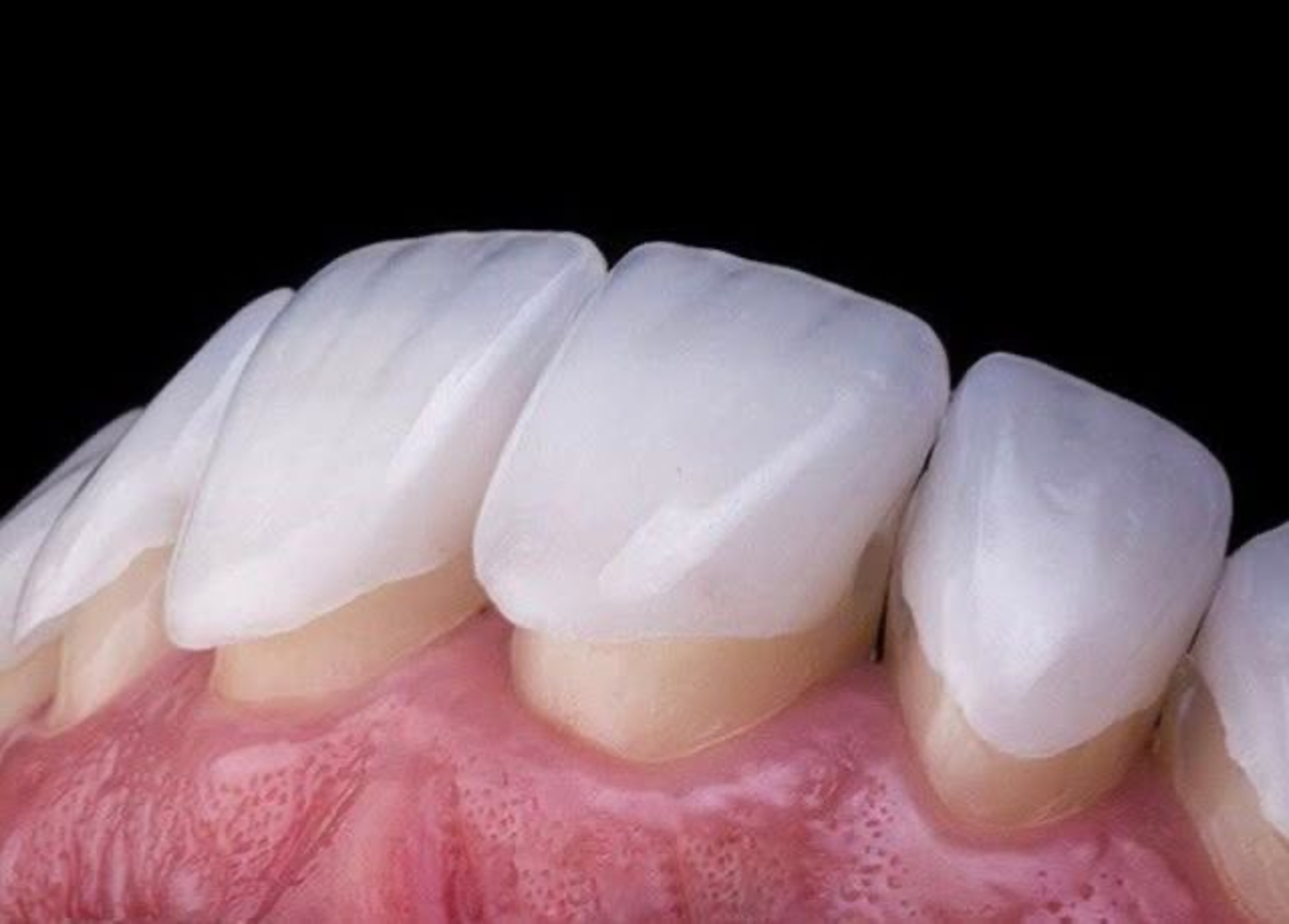
- Conventional preparation: a small amount of the front surface and edges is removed so the veneer sits flush.
- Minimal preparation: very little is removed, where the tooth and the plan allow it.
- No preparation: only in suitable cases, for example small or slightly inward-set teeth; on other teeth an unprepared veneer can look bulky.
Whether minimal or no preparation is possible depends on your teeth and your plan; it is not suitable for everyone. Removing enamel cannot be undone, so how much is needed is explained before you decide.
Brand names are products, not types
Lumineers, for example, is a brand of thin porcelain veneers marketed for placement with little or no preparation. Like other brands, it falls under a material and a preparation approach rather than forming a category of its own. Mentioning a brand here does not mean Marble Arch offers it; ask what material is proposed for you, and why.
"Hollywood smile" is a look, not a type
It usually means very white, very even teeth. It can be made from different materials, and a very bright, uniform result can look less natural than a smile matched to your face. How shape, color and proportion are chosen is in smile design.
Veneer or crown?
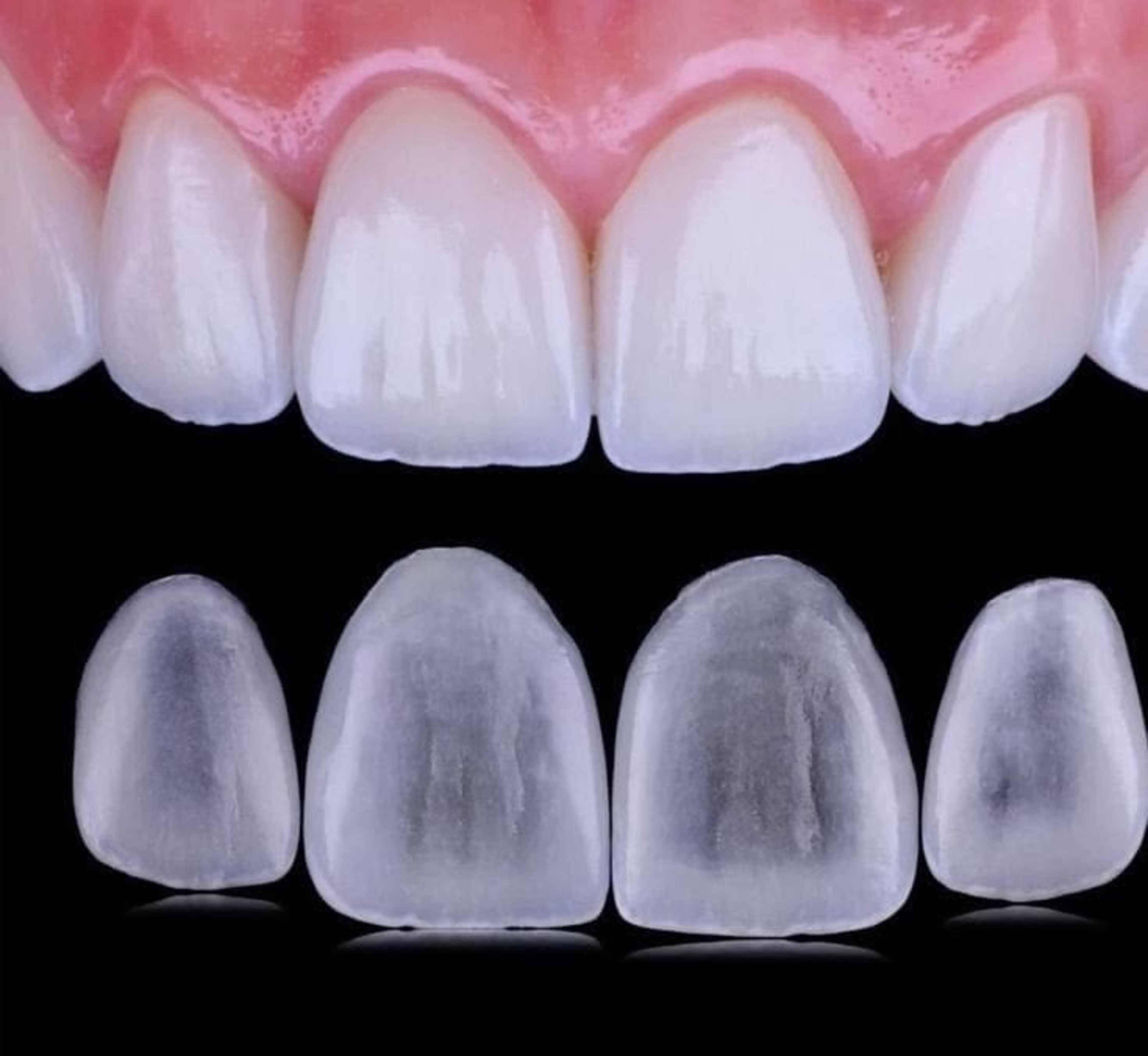
A veneer covers the front of a tooth and its edges; a crown covers the whole visible tooth. A crown is considered when a tooth is weakened, heavily filled or cracked. If you are deciding between bonding and veneers, see bonding or porcelain veneers.
Questions patients ask
Which veneer is best? None is best for everyone; it depends on the teeth, the bite, the change you want and your budget.
How long do veneers last? Long-term studies report good survival for several types of ceramic veneers. Results vary with the material, the amount of enamel available for bonding, bite forces and ongoing care. Veneers may still need repair or replacement over time.
Read more about porcelain veneers and dental crowns.
Sources
- American Dental Association, MouthHealthy, Veneers, read October 25, 2026.
- Ivoclar, IPS e.max CAD, manufacturer's product page, read October 25, 2026: veneers from 0.4 mm. For the milled material the manufacturer reports a biaxial flexural strength of 530 MPa, a laboratory measure of how much bending force a test disc withstands; it is not a measure of how long a veneer lasts in the mouth.
- Rojas-Ruedas S, et al. Narrative Review of Lithium Disilicate Veneers in Esthetic Dentistry. Case Reports in Dentistry, 2026. A review of lithium disilicate veneers; its findings come from selected patients and apply to that material.
- Klein P, et al. Survival and Complication Rates of Feldspathic, Leucite-Reinforced, Lithium Disilicate and Zirconia Ceramic Laminate Veneers: A Systematic Review and Meta-Analysis. Journal of Esthetic and Restorative Dentistry, 2025;37(3):601-619. For zirconia veneers, the review reports 100% survival at 2.6 years and states that no long-term data was available.
- Lumineers, brand website, read October 18, 2026.