Multiple-Tooth Dental Implants
When several teeth are missing, implants can replace them without a removable appliance. Depending on where the gaps are, each tooth may have its own implant, or a few implants may carry a bridge.
The number of implants and their places are planned after an examination of your teeth, gums and bone.
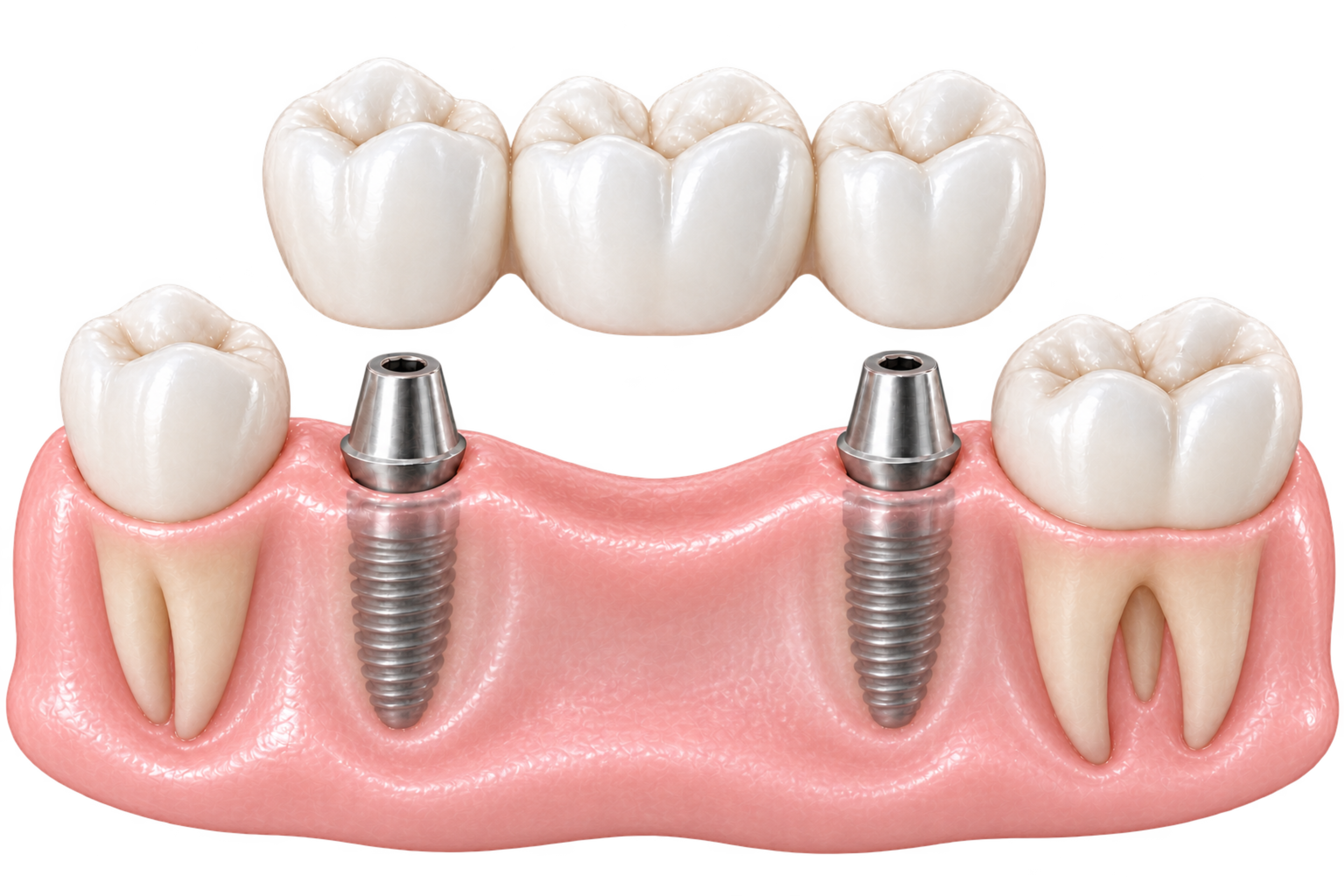
- BridgeThree connected teeth replace the missing ones.
- ImplantsTwo implants in the bone carry the bridge, so the teeth beside it are not used for support.
A plan for the teeth you are missing
Missing teeth side by side are often replaced differently from gaps in separate parts of the mouth. At your examination we look at where the teeth are missing and the bone in each place, and explain the options that fit.
Implant-Supported Bridges
Two designs are common. With separate crowns, each missing tooth has its own implant and its own crown, and each is cleaned like a natural tooth. With an implant-supported bridge, two or more implants carry a row of connected teeth, so fewer implants can replace more teeth, and the neighboring natural teeth are not used for support. The bridge is fixed in place and is cleaned around and under each day, as we show you. Which design fits depends on how many teeth are missing, where they are, and the bone in each place.
Related treatments
Questions patients ask
Is the treatment done all at once?
That depends on the plan. Some cases are treated in one stage and others in several; we explain the order before treatment begins.
Is the bridge removable?
No. It is fixed to the implants; only the dentist removes it when needed.
How is it different from a traditional bridge?
A traditional bridge is held by natural teeth that are reshaped for it; this one is held by implants.
Talk with us about your options
Book a consultation, or call us and we will find a time that suits you.