About
Digital Dentistry
A small handheld scanner creates a detailed 3D model of your teeth and gums, so you can see what we see. For suitable treatments, it offers an alternative to a traditional impression tray.
What digital scanning is
A small camera moves gently around your teeth, building a three-dimensional model on the screen as it scans. Instead of using a tray of impression material, it records the shape of your teeth and gums digitally. We can rotate and enlarge the model to examine it with you.
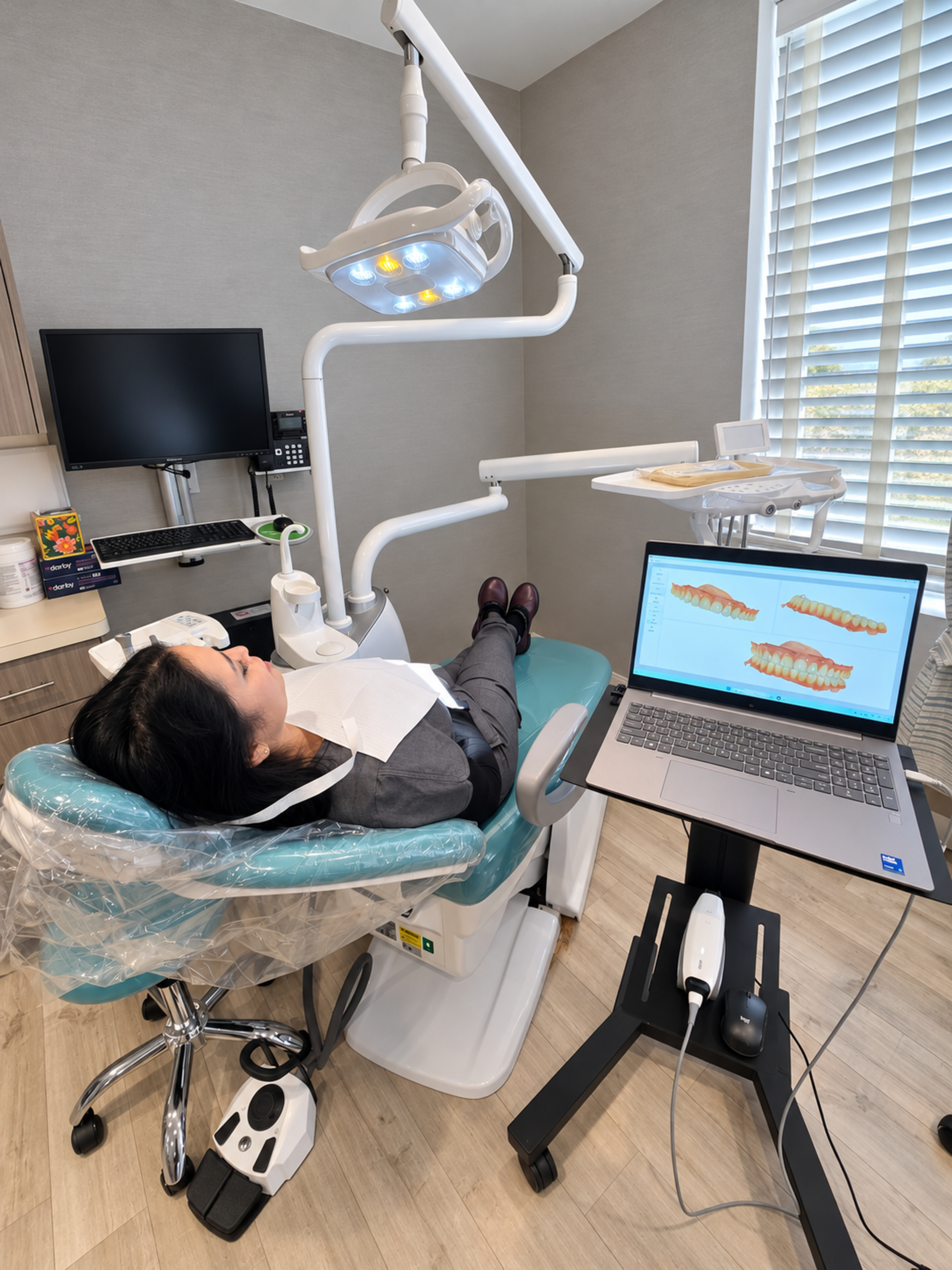
- Where a scan is suitable, there is no tray of impression material in your mouth.
- You can see the model on the screen beside you, and we can talk through it together.
- If part of the scan needs to be redone, we can repeat it during the same visit.
- The model is kept digitally, so it can be looked at again at a later visit.
What happens during a scan
- You sit as you would for an ordinary check-up, and we explain what we are about to do.
- A small camera is moved slowly around your teeth. You can ask to pause at any point.
- The 3D model builds up on the screen as the scan progresses.
- We look at the model with you and talk through what it shows and what the options are.
The equipment
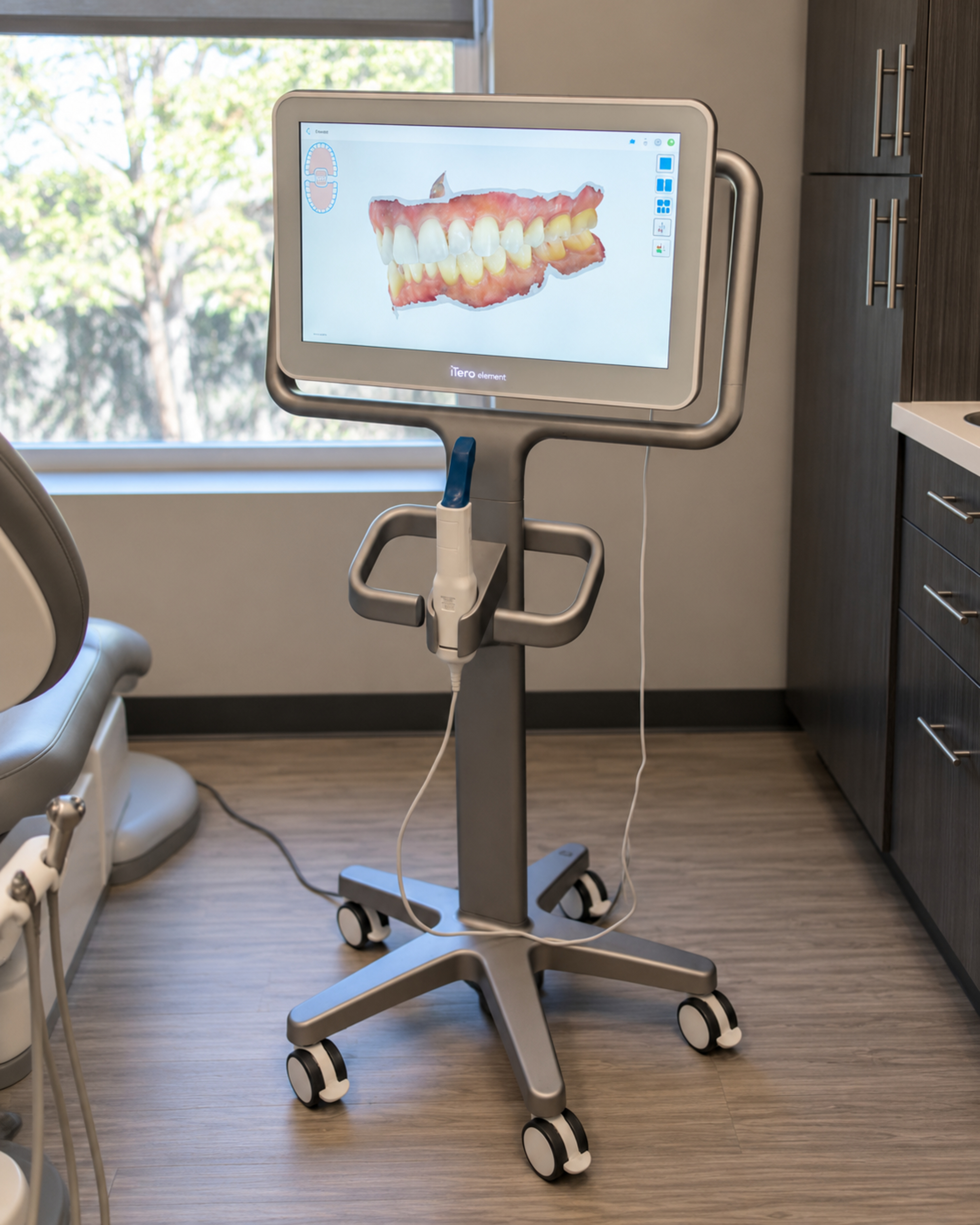
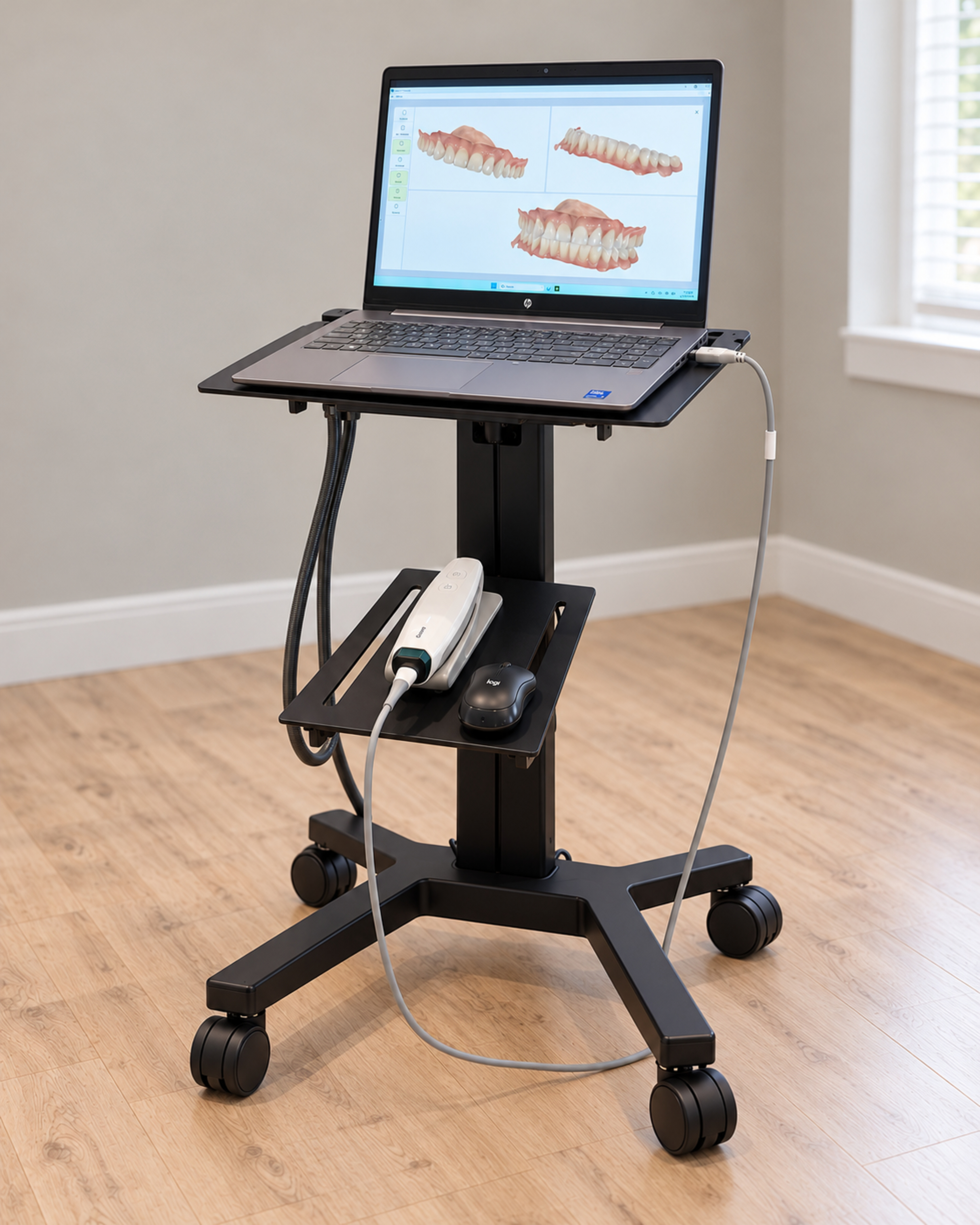
The scanning camera captures the shape of your teeth, while the connected screen displays the 3D model. These photos show two setups: a scanner with its own screen on a wheeled stand, and a scanner connected to a laptop.
Scanner with integrated screen
The scanning unit and screen share a wheeled stand, keeping the equipment together beside the treatment chair.
Laptop-connected scanner
The scanner connects to a laptop, where the three-dimensional model of the teeth appears on screen.
Where scanning is used
- Planning and fitting dental crowns and bridges.
- Restorations supported by dental implants.
- Dentures and partial dentures.
- Talking through Smile Design and porcelain veneers before any treatment begins.
- Keeping a record of the shape of your teeth that can be compared at a later visit.
What does a scan feel like?
A small scanning camera moves slowly around your teeth. There is no impression material that needs to set in your mouth. If you need a break, let us know and we will pause.
How long does it take?
The time needed depends on the area being scanned. It usually takes up a small part of your appointment.
Does a scan replace traditional impressions for every treatment?
No. Digital scanning suits many procedures and is used where it is appropriate. Some treatments are still better served by a conventional impression, and we will tell you which applies in your case.
Can I see the 3D model of my teeth?
Yes. The 3D model of your teeth appears on the screen beside you during the appointment, and we can go through it together.
See it up close
If you would like to see how digital scanning works, book an appointment and we will show you.